Gravel Nyna Cup Through Alica's Eyes – Sand, Grit, and Fighting Through the Pain in Gajary
On Saturday, September 19, round six of the Slovak Gravel Cup (Nyna Cup) awaited me in Gajary. This was my third gravel race of the year, so I went in hoping it would go a bit smoother than the first two!
Race day kicked off with my usual routine. Everything was packed the night before, so all my boyfriend Ernie and I had to do in the morning was brew coffee and make breakfast, which I ate in the car on the way over (always oatmeal—the safest fuel for pre-race stomach nerves). I woke up feeling good and ready to take on whatever the course threw at me.
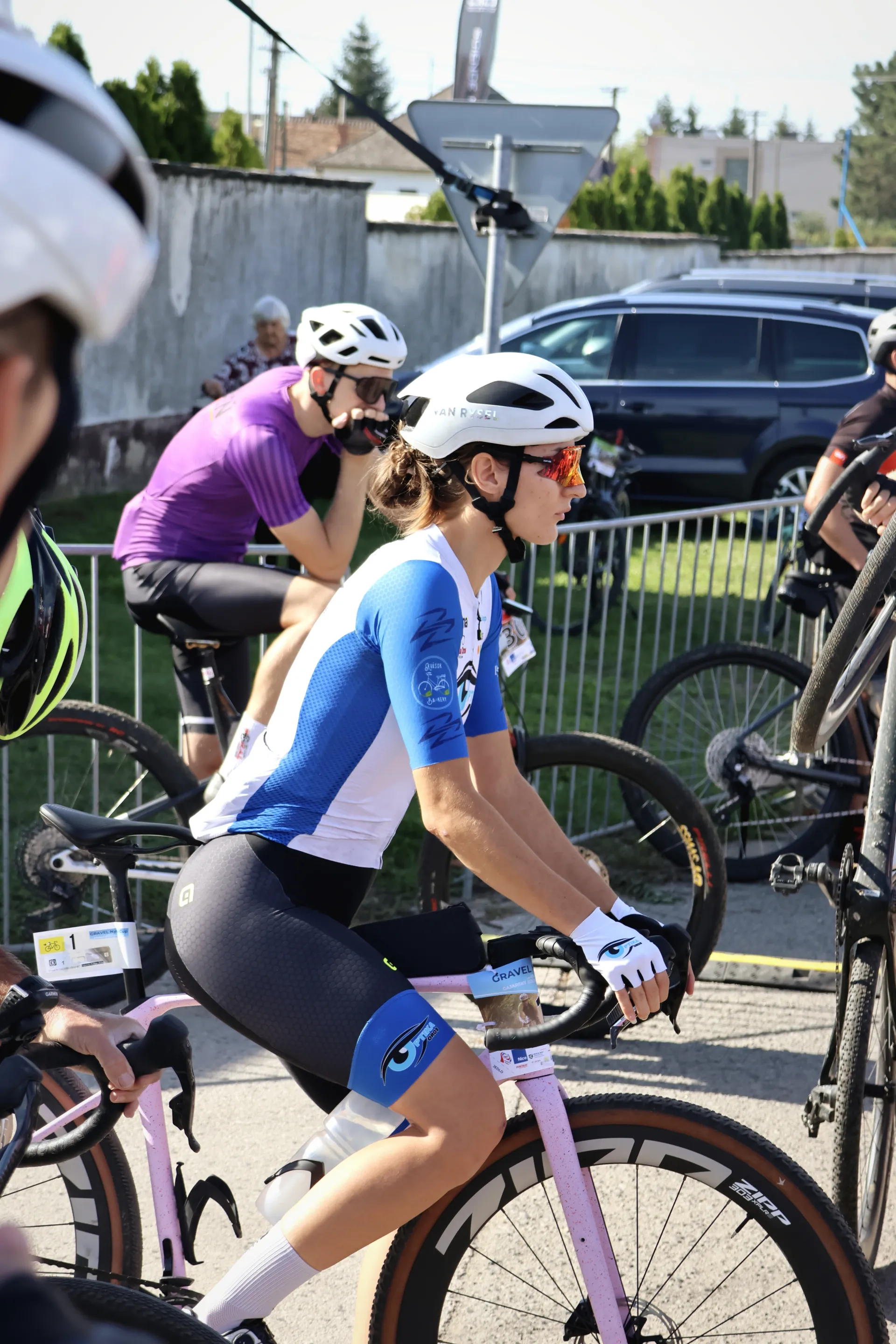
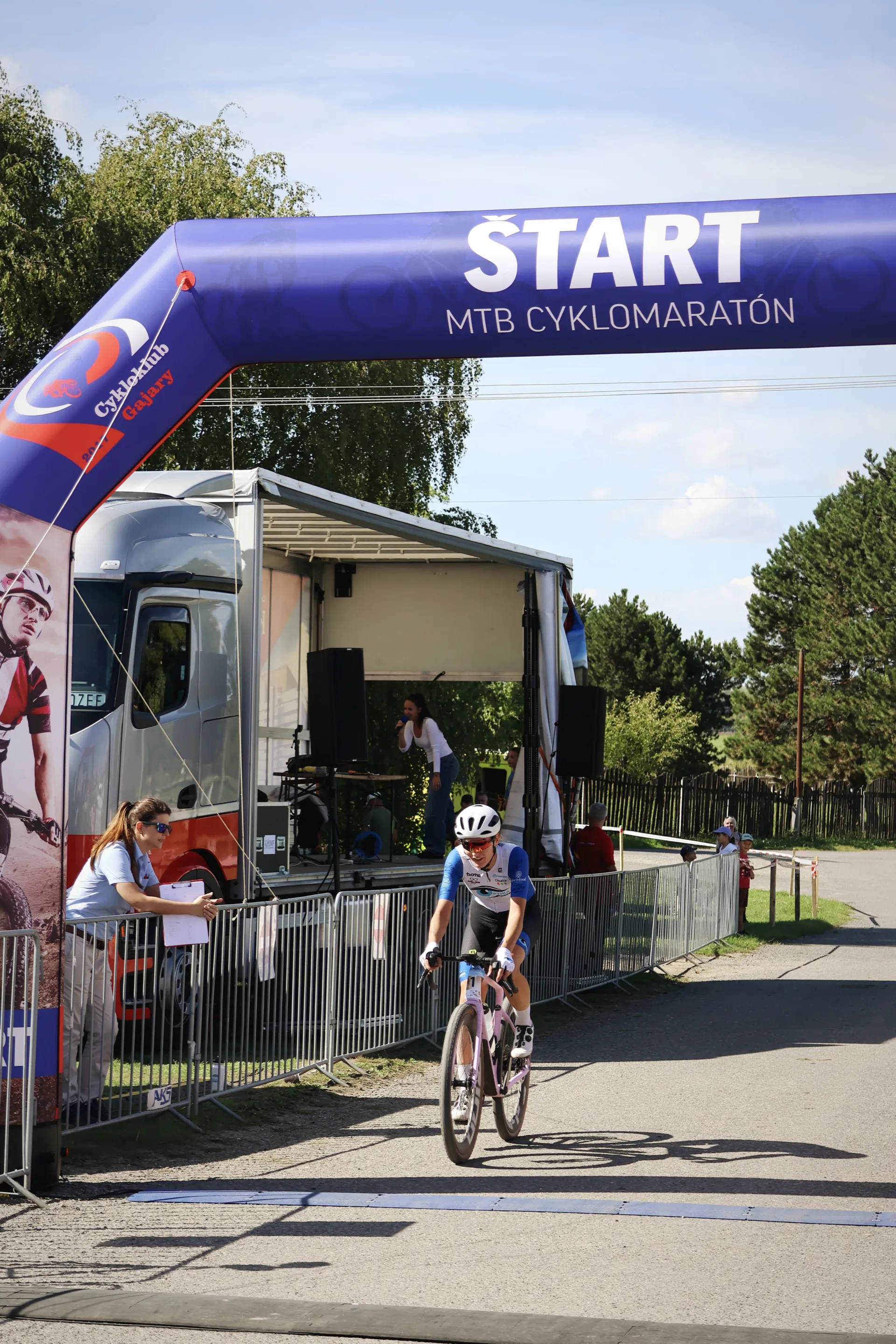
The start was delayed by about 10 minutes. While I’m not a fan of those tense, lingering minutes on the start line, it didn't throw me off. The rollout felt calmer than usual; I slotted in near the back of the bunch because I didn’t want to hold up the faster guys up front. My main focus was keeping an eye on my direct competition—unfortunately, there were only two of us women taking on the long 81 km distance.
The opening kilometers went well, and a small group quickly formed with two male riders and myself. I had some respect for the first technical sand section, but I handled it surprisingly well considering how little sand riding experience I actually have. Almost the entire loop was on unpaved roads, with just a few stretches of asphalt near the end of the lap.
The most demanding sections were hands down the sandy opening and the steep transitions on and off the dam. I gave away quite a few seconds there, and on the final lap, my left brake-shift lever actually worked itself loose on a descent off the embankment. The rough terrain was relentless on the entire body—especially for me, since my gravel training sessions usually take place on much smoother gravel roads.
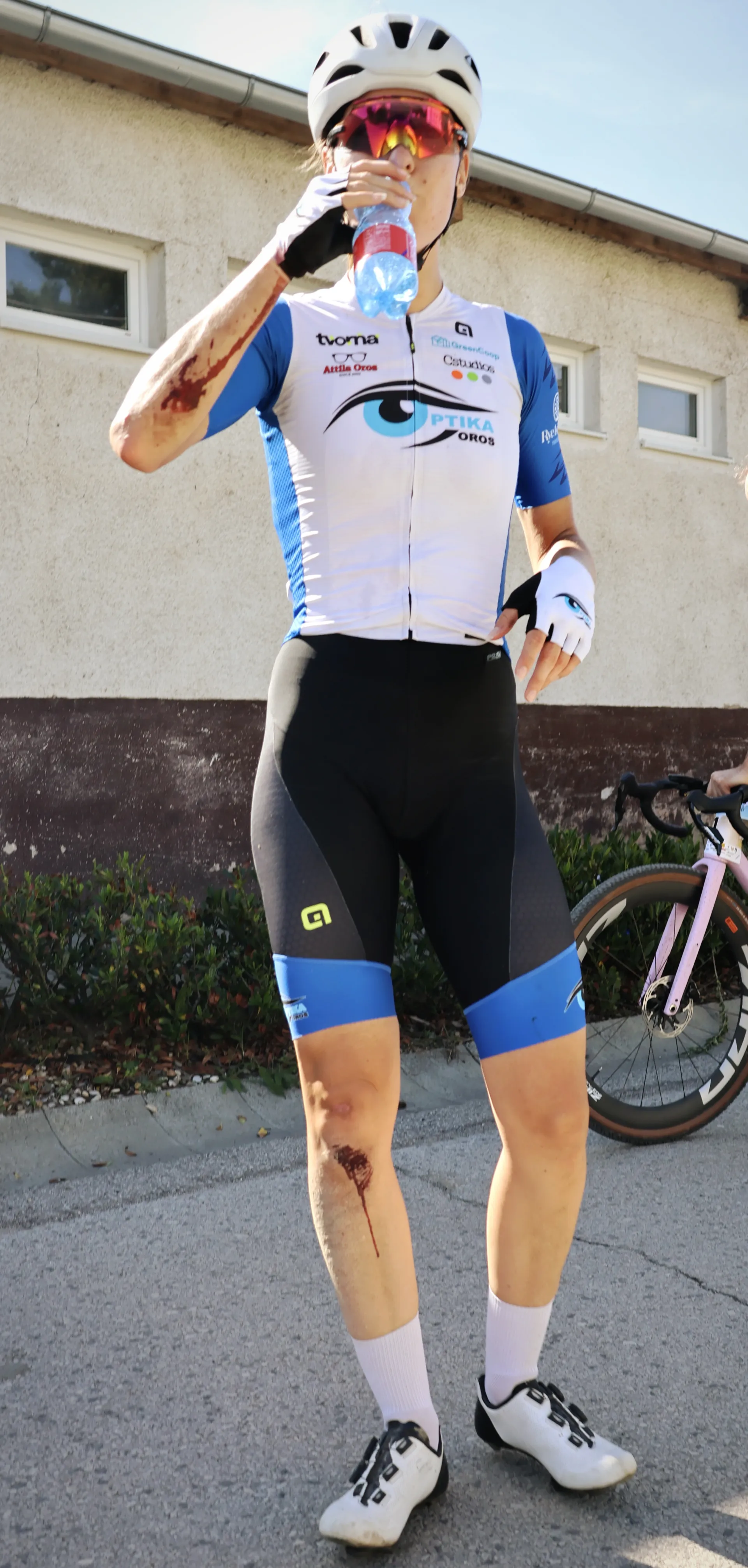
The strategy was straightforward: ride the cleanest, most efficient race possible, and be the first of our pair across the finish line. Early on, the plan worked like a charm; I led my rival for most of the lap. Just before the asphalt section, we were riding in a group of about four, including my rival, with me pulling on the front. That was when one turn proved costly: I misjudged the angle and the surface. It was deep, loose gravel; I carried too much speed in, and the bike washed out from under me onto my left side. Despite the pain, I was back on my feet in about 20 to 30 seconds, tightened up my loose shoe, and pushed on to chase down the group. Taking stock of the damage, blood was already dripping down my arm onto the handlebars, and my left leg was badly scraped up. The pain hit hard at first, especially over the bumpy sections—which was essentially most of the course. I dropped about two minutes to my rival during that second lap. I managed to hitch a ride on the wheels of some approaching MTB riders on a few sections, but they dropped me through the technical turns. The final lap was practically a solo time trial against myself.
Even with the crash, I crossed the line just 4 minutes behind my competitor with an average speed of 26.1 km/h, stopping the clock at 3:05:53. Between the crash and three hours of flat-out effort, my body was completely drained. Gravel racing is virtually incomparable to road racing—it places far heavier demands on the entire body.
I walked away with invaluable lessons on handling loose, shifting terrain, along with some serious road rash that actually ended up triggering a brief illness a few days later. As for the gravel bike, it’s going into recovery mode for the rest of the season—ready to come out again for winter base miles!